Wall Street professionals have a broadly positive perception of prediction markets, but the nascent sector’s lack of liquidity is a key stumbling block to reaching the mainstream.
Around 43% of market structure experts view prediction markets as an innovative value-add to the overall marketplace, according to a flash survey conducted by Crisil Coalition Greenwich this month. A similar range were neutral on the space’s prospects, while around a fifth said the markets encourage gambling and introduce additional “risk noise” instead of trading signals.
The survey of 53 market specialists in the US provides a snapshot into Wall Street’s perception of prediction markets at a time when the space is booming. Major players, including CME Group Inc., Intercontinental Exchange Inc. and Cboe Global Markets Inc., are investing in the sector, while others like Susquehanna International Group Inc. are participating as market makers.
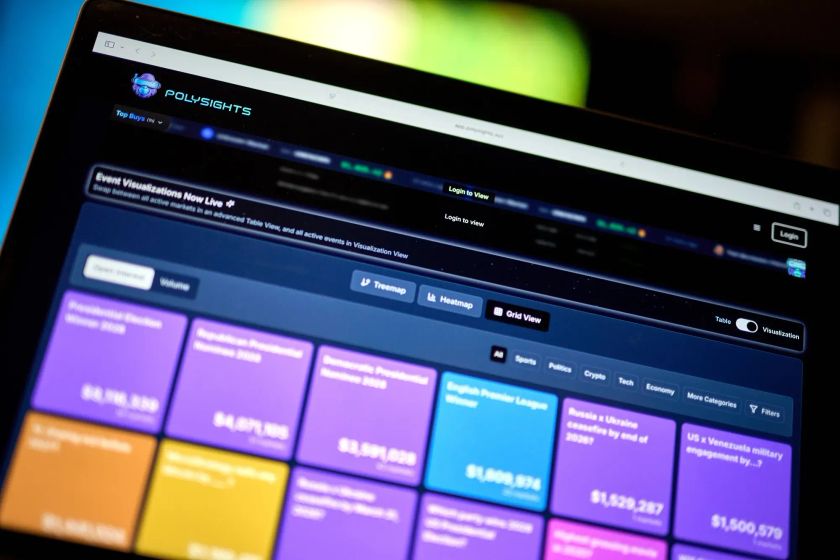
Prediction-markets platforms like Polymarket and Kalshi allow traders to wager on binary outcomes, tracking everything from economic releases to Oscar winners. The companies argue the data generated by such contracts allow traders to effectively harness the wisdom of the crowd, producing accurate forecasts that can inform risk-taking and policy decisions.
Get the Morning & Evening Briefing Americas newsletters.Start every morning with what you need to know followed by context and analysis on news of the day each evening. Plus, Bloomberg Weekend.
One of the largest concerns voiced by survey respondents, which ranged from buy-side and sell-side traders to fintech providers, was a lack of liquidity in prediction markets, with many markets too small to generate actionable insights. Some generate just tens of thousands of dollars in volume, while the largest — often tracking sports games or geopolitical events — can top hundreds of millions of dollars.
“The wisdom of the crowd only works when you have a crowd, and many of the economic and political contracts listed on the major markets remain thinly traded,” Jesse Forster, a senior analyst on Coalition Greenwich’s market structure and technology team, wrote in a report on the findings. “The market’s momentum suggests this will change over time, but we all know liquidity begets liquidity, and starting that virtuous cycle can be tough.”
Nearly three-quarters of respondents said prediction markets will give institutional investors a new vehicle for speculation on world and financial events in the coming year. Meanwhile, only a third suggested prediction markets could be used for a new approach to hedging — a key argument made by platforms like Polymarket and Kalshi as they try to expand their order books.
Source: Crisil Coalition Greenwich 2026 Prediction Markets Flash Study
Note: Other includes market sentiment data, information value only, a new source of uninformed investors for sophisticated investors to proft from. Based on 53 respondents.
“This is probably a little bit of wishful thinking,” Forster said, referring to the betting platforms’ goal. “I don’t think we’re going to see a ton of institutions going negative on Mamdani on Kalshi to hedge their real estate investments in New York City.”
About a fifth of specialists said they don’t expect prediction market data to be very valuable to institutional investors in the next one to two years, while 4% said it won’t be valuable at all.