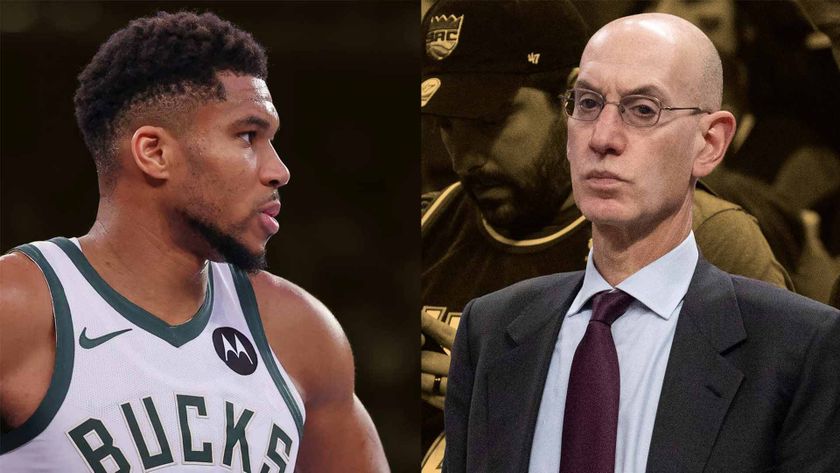
NBA commissioner Adam Silver addressed Giannis Antetokounmpo‘s controversial involvement with prediction market company Kalshi during his annual All-Star weekend media availability.
The Milwaukee Bucks superstar drew criticism after revealing he had become an investor in Kalshi just one day after the NBA trade deadline. However, Silver indicated he does not view the situation as problematic.
“From what I understand, it’s a minuscule investment, much smaller than one percent, so that does not violate the rules that have been collectively bargained with the Players’ Association,” he said.
Keep Watching"When you've had a bite of a really good steak... You want that steak again" - Giannis Antetokounmpo says he wants another shot at the title in Milwaukee"When you've had a bite of a really good steak... You want that steak again" - Giannis Antetokounmpo says he wants another shot at the title in MilwaukeeWatch More
Did Giannis play the public?
Kalshi is a web-based prediction market exchange launched in 2021 in New York by Tarek Mansour and duly licensed by the Commodity Futures Trading Commission. It operates as an alternative to traditional sports betting. Instead of a bookmaker setting odds against bettors, Kalshi operates as an exchange where users trade contracts based on predicted outcomes.
From December 3, 2025, through the end of the 2026 NBA trade deadline, Kalshi ran a prediction market for Antetokounmpo’s next team on its app, which generated $23.3 million in volume when it closed and paid out.
What people did not like was that, during the two months it was open for contracting — not betting — Antetokounmpo kept telling reporters he did not want to leave Milwaukee, yet at the same time, he gave hints he wanted to be traded. While his intentions may have been honest, many felt he played the public and influenced the movement of money around his prediction market.
“Obviously, it’s an issue that I’m paying enormous attention to,” Silver added. “It’s rapidly evolving. We are currently looking at prediction markets essentially in the same way that we are looking at sports betting. The league is essentially dealing with 40 different jurisdictions that have legalized sports betting in the United States. The last I looked, there are 80 countries in the world outside the United States that also have legalized betting on the NBA. So it concerns me in the totality of all these betting, but we need a better handle, no pun intended, on all the different activity that’s happening out there.”
Compromised impartiality?
Although Adam Silver maintained that there was nothing improper about Giannis Antetokounmpo becoming a part-owner of Kalshi, many online critics reacted strongly to the announcement. They argued that holding a financial stake in a prediction market company while potentially participating in markets tied to the league presents a significant conflict of interest.
“A player in massive trade rumors owning part of a prediction market where people can bet on whether he gets traded is a MASSIVE conflict of interest. This is so far beyond players doing sportsbook ads,” wrote former ESPN writer Joon Lee on “X”.
If Silver considered prediction markets similar to sports betting, then maybe he should have an issue with them. Because no matter how small Antetokounmpo’s investment in Kalshi is, the fact remains that he is part of a company where people place contracts — or bets if you want to look at it that way — on markets including himself. Doesn’t that raise an ethical issue?