When Federal Reserve Chair Jerome Powell stepped up to the podium on Jan. 28, the room hushed in anticipation. The reporters attending the Federal Open Market Committee press conference in Washington hung on Powell’s every market-moving word. Would he hint at adjustments to the overnight lending rate? Would he discuss the effect of tariffs on prices? Would he address questions about his successor?
Online, another group was monitoring Powell’s performance no less closely, but for a very different reason. On Discord and X, dozens of traders had been discussing their bets on which words would come out of Powell’s mouth. Many were sure he’d say “good afternoon.” (He usually does.) Others wagered on “shutdown,” “layoff,” “yield curve” or “egg,” among the 44 different terms offered on the prediction market platform Kalshi.
From his parents’ house in Orlando, Austin Minton, a 23-year-old livestreamer with shaggy blond hair, shared his thesis that Powell wouldn’t say “Trump,” pointing out that the Fed chair hadn’t done so in recent remarks. Minton had also wagered that Powell wouldn’t say “projection,” since the recent government shutdown meant there was less economic data available, but that he would say “renovation,” in reference to the reconstruction of the Federal Reserve building, which critics including the president were saying raised questions about Powell’s integrity. Before the speech even began, bettors had traded more than $2.8 million on Kalshi’s Powell market.
“Good afternoon,” Powell said. Minton pumped his fists. “Yes!” he exclaimed. “Easy three bucks.”
Powell began reading his prepared remarks. His words echoed an earlier FOMC release, but he added new material, mentioning a “shutdown” (market odds had been at 67%), “softening” (59%) and “layoffs” (76%). Moving on to the Q&A with reporters, he hit “restrictive” (62%), “Beige Book” (the Fed’s biquarterly report, 30%) and “tariff inflation” (13%). When Powell fielded a question about the Justice Department investigation of the Fed building project, Minton braced himself, hoping not to hear the president’s name. Powell dodged the question, prompting Minton to rejoice and praise him: “That’s the GOAT!”
As the presser went on, the percentage odds on the remaining words declined on Kalshi, as they typically do on a “mention market” like this. By the last question, it seemed a safe bet Powell wouldn’t utter “pandemic” (now at 17%), “projection” (12%), “uncertainty” (8%), “trade war” (3%) or “renovation” (2%).
Then, however, he did something astonishing. Responding to the final questioner, he went on a mention spree. “The Summary of Economic Projections … we hadn’t had a pandemic in 100 years … a trade war of this scope … there’s great uncertainty at different points.” It was the prediction market equivalent of a last-second pass leading to a 60-yard zigzag run through defenders, capped by a headlong dive across the goal line. Minton, who’d bet that Powell wouldn’t say “projection,” was devastated. “Oh my God, at the end? Last question? C’mon, Powell!”
The press conference ended. The traders on Discord debriefed on their wins and losses. But something was off. On Kalshi, the odds on “renovation” were suddenly climbing. (Kalshi doesn’t resolve markets and pay out winnings until some time after an event finishes.) Minton was confused. “Did he say ‘renovation’? This is crazy.” He pulled up a clip and saw that one of Powell’s final answers included a rare slip of the tongue: “When it comes to technological developments that raise potential output, some kind of technological renovation”—Powell then corrected himself—“you know, revolution like happened in the ’90s here, and like may be happening now with AI ... .” The tape didn’t lie: Powell had said “renovation.” Minton speculated that it had been a Freudian slip fueled by Powell’s determination not to talk about the investigation.
The Discord chats went berserk. One trader, Foster McCoy, who was on a voice channel with a dozen others, heard grown men screaming. “I lost my mind,” McCoy later recalled. “Like, what are the odds it hits as a buzzer beater?” “IVESTIGATE POWELL [sic]” wrote one Discord user, jokingly implying that Powell had made insider trades. “Might be the most insane market I’ve ever traded,” tweeted a respected 21-year-old trader who goes by Esoteric Catboy and who said he’d made more than $5,000 on the press conference.
Mention markets are the high-octane, fast-twitch speed competitions of the prediction market world. But they’re just one corner of it. Users of Kalshi and its primary rival, Polymarket, can bet on events major and minor, from politics to sports to culture to the weather. Recent markets on Kalshi have included whether certain words would be used during a Palantir Technologies Inc.earnings call, whether Elon Musk would win his court case against OpenAI and whether the highest temperature in Seattle on Feb. 4 would be within a certain range. Polymarket users have bet on whether the US would strike Iran on a particular date, whether a given Trump cabinet member would be the first to leave office and whether Jesus Christ would return before 2027.
Prediction markets were once a fringe obsession of economists and election wonks, but in the past year or so, they’ve gone from obscure to everywhere. The industry is booming thanks to a combination of marketing, distrust in traditional sources of information and a newly friendly regulatory environment. Late last year, Kalshi Inc. and Polymarket, both headquartered in New York City, raised funds at valuations of $11 billion and $8 billion, respectively. In the weeks leading up to the Super Bowl, Kalshi users were betting more than $2 billion a week, while Polymarket users were just shy of that, according to user-compiled data on Dune Analytics.
The companies are also rapidly insinuating themselves into American media. Both have struck deals with major sports leagues to provide data during games. Kalshi has partnered with CNN and CNBC, while Polymarket has a contract with Dow Jones, meaning prediction odds are likely to be integrated into coverage of elections and other events. During the Golden Globes on CBS in January, a Polymarket chyron flashed before each award was handed out, correctly predicting nearly all 28 winners. “Seeing people look at the Polymarket odds for certain things that otherwise they would just be pontificating or talking past each other about, that’s the thing that really makes me excited,” says Polymarket’s chief executive officer, Shayne Coplan.
In October, Polymarket announced an investment of up to $2 billionfrom Intercontinental Exchange Inc., which owns the New York Stock Exchange, a deal that will likely lead prediction market data to be integrated into financial tools used by institutional traders. Susquehanna International Group, Jump Trading and other major firms are providing liquidity on Kalshi to facilitate trading. In January, Goldman Sachs Group Inc. CEO David Solomon called prediction markets “super interesting” and said he had a team looking into them.
Boosters say prediction markets create economic and social value by providing better information about what will happen in the world. People could use them to hedge against risk—by betting that a hurricane will hit, say, or that the US government will shut down—or simply to make better decisions in the face of uncertainty.
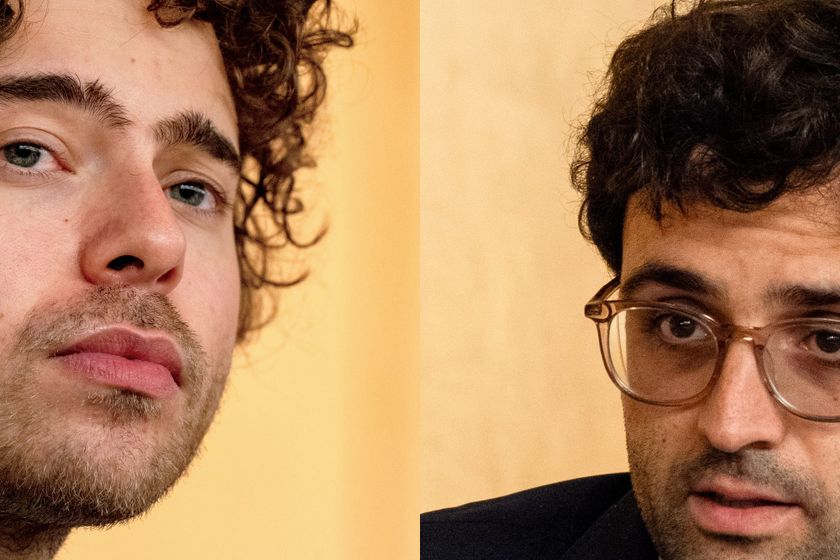
Both Polymarket and Kalshi pitch themselves as sources of truth in a time of epistemic precarity. Coplan says his platform is a guide for “when you’re thinking about the world, you’re thinking about government, and you’re thinking about macro trends and headwinds that could impact your life.” Kalshi co-founder and CEO Tarek Mansour says prediction markets “take debate from the realm of subjective emotion to the realm of objective math. And that’s why it ends up being a little bit more truthful.” The company’s other co-founder, Chief Operating Officer Luana Lopes Lara, has called betting on one’s beliefs a “tax on bullshit.”
Detractors call prediction markets glorified gambling. Indeed, the vast majority of the volume on Kalshi is betting—or, as the company puts it, “trading”—on sports. For all the highbrow talk of price discovery and revealed truths, it can be hard to discern the economic or social value of knowing the likelihood Pete Davidson will attend the Super Bowl. (“People care about the things they care about, and it’s not necessarily our job to decide what people are going to care about,” Mansour says. Coplan says of betting on celebrity appearances: “I don’t care for those markets.”)
And the markets’ relationship with truth is complicated. They can be vulnerable to manipulation, insider trading and other shenanigans. In many cases, they influence reality as much as reflect it. Not to mention that their rules and decisions about what did or didn’t happen can be inconsistent.
The companies are also facing headwinds. While Kalshi is regulated federally, by the Commodity Futures Trading Commission, it’s either the plaintiff or defendant in at least a dozen lawsuits with states or Native American tribes claiming it’s an unlicensed gambling platform that falls under state or local jurisdiction. Polymarket was recently banned in Nevada, at least temporarily, while a state gambling commission lawsuit plays out there. Several individuals have initiated class actions against Kalshi and Polymarket alleging that they’re operating illegal gambling sites and promoting addiction. (Asked for comment on the suits, a Kalshi spokesperson pointed to a statement by Lopes Lara calling one of them “baseless.” Polymarket didn’t respond to a request for comment.) The companies argue they should continue to be regulated by the CFTC—which is currently well-disposed to prediction markets—but a victory by the states could deal a blow to their business models. Even if the CFTC does maintain its jurisdiction, it’s unclear what happens if and when a new, more skeptical administration takes over.
Furthermore, many people don’t like the platforms’ sudden ubiquity. “I am worried about potential backlash and how long that could last,” says Robin Hanson, an associate professor of economics at George Mason University who’s considered a founding father of prediction markets. Coplan acknowledges there’s been a “vibe shift” the past few months: “You always get told eventually you’ll cross this chasm where you’ll go from the underdog to everyone thinking it’s a big thing, and people turn against it. And I think that’s this moment.”
Whether prediction markets will persist, never mind fulfill their founders’ vision of life guided by the wisdom of crowds, depends on how the companies handle these challenges. Can they show customers they can be trusted?
Source: @datadashboards at Dune
The allure of prediction markets lies in their simplicity: You’re asked whether a given event will occur, and you pick “Yes” or “No.” Technically, on Kalshi and Polymarket, you’re buying one or more contracts that pay out $1 each if you’re right and nothing if you’re wrong. As hundreds or thousands or millions of those yes-or-no contracts are bought and sold, the price fluctuates somewhere between 1¢ and 99¢. That price (20¢, say) is intended to serve as the implied probability of the event occurring (20%), which translates into a prediction.
Just as prices in a stock market aggregate information, so do prices in prediction markets. In an election market, for example, one bettor might have analyzed a candidate’s county-by-county support. Another might have created a sophisticated turnout model. Another might learn that a candidate is sick. Another might even have conducted a poll. No single person will have access to all of this. But when they place bets based on their information, it all gets channeled into a single figure.
Prediction markets aren’t new. Betting on papal conclaves was common in Italian city-states until Pope Gregory XIV banned the practice in 1591. (It continued underground.) In the 18th century, British gamblers wagered on whether the Tea Act would be repealed, and during World War II Londoners bet on how many German planes would be shot down. Election betting has been rampant in the US going back almost to the country’s founding, with New York City a particular hotbed; newspapers would cite odds, and patrons would show support for candidates by placing large public bets. Even a century ago, election odds were impressively accurate, according to research by Paul Rhode of the University of Michigan and Koleman Strumpf of Wake Forest University. The markets got only one of the 15 presidential elections between 1884 and 1940 wrong—1916, when underdog Woodrow Wilson prevailed.
Election markets declined in the US after that, which Rhode and Strumpf ascribe to the rise of scientific polling, a crackdown on gambling by New York City Mayor Fiorello La Guardia and the legalization of racehorse betting in New York state. But they began a slow comeback in 1988, when researchers at the University of Iowa created the Iowa Electronic Markets, getting a carve-out from existing law because their purpose was academic and the wagers were capped. It soon proved to be more accurate than polling.
Around the same time, Hanson, the future George Mason economist, was working in Silicon Valley and pushing prediction markets beyond mere prognostication. Convinced they could guide leaders to make better decisions, he helped create the first internal corporate prediction markets in 1990. (One such market asked employees to bet on when the company would deliver its product.) In 1995 he proposed “ideas futures” to ascertain which academic research questions were most promising and deserving of funding. And in a 2000 academic paper he suggested a form of government called “futarchy,” in which prediction markets would shape policy decisions—legislators might, for example, pass whichever gun law the markets predicted would result in the lowest murder rate. (He also flagged many potential drawbacks, including, as one section title had it, “You Can Not Pay Off Bets If Earth Is Destroyed.”)
Hanson got a chance to implement some of his ideas at a high level in 2001, when the Defense Advanced Research Projects Agency (Darpa) agreed to fund a project he and his team called the Policy Analysis Market. The plan was to create markets that would help predict events in the Middle East. But critics called it a “terror market” and warned that it would incentivize terrorist attacks. The project was scuttled in 2003.
“Nothing is more valuable than the truth”
Prediction markets’ reputation improved gradually as that of polls declined. But tough regulation in the US meant they got limited traction. In 2016, Mansour, then a student at the Massachusetts Institute of Technology, was interning at Goldman Sachs when clients asked his team to find ways to hedge against Brexit. They came up with a complex set of financial levers they guessed would correlate with Britain leaving the European Union. But it struck Mansour as silly that the clients couldn’t just bet on the event itself. In 2018 he and Lopes Lara, a friend from MIT, founded Kalshi. They envisioned an exchange where anyone could make a trade based on almost any real-world event. (Kalshi means “everything” in Arabic.)
Two years later, in 2020, Coplan, a New York University dropout, created Polymarket in what he described as his “bathroom office.” He’d been deep into crypto and was inspired by Hanson’s writings to build a prediction market on the blockchain. Polymarket reflected the libertarian ethos of its crypto ecosystem: anonymity, zero fees, minimal intervention. On a podcast at the time, Coplan described the operation as “basically nonprofit.”
For both companies, the timing was bad. Joe Biden’s administration took a dim view of prediction markets, and at first the CFTC approved only a handful of relatively tame offerings on Kalshi, such as predictions about inflation or Federal Reserve interest rates. The administration was “as hostile as it gets,” Mansour said on Bloomberg’s Odd Lots podcast last year. “They just didn’t want it to exist.” The CFTC accused Polymarket of operating an unlicensed exchange, and, as part of a 2022 settlement, the company agreed to pay $1.4 million and blocked Americans from trading on the platform, without admitting wrongdoing. (In practice, Americans could still access the site using software that hides their location.) Two years later, the CFTC banned Kalshi from posting some political betting markets and proposed an outright ban on event contracts related to sports, elections and awards shows.
Everything changed in late 2024. That September, Kalshi won a lawsuit challenging the CFTC’s political markets ban, which cleared the way for legal betting on the presidential election. Kalshi began drawing massive volume, as did Polymarket, though it was still blocked in the US. On Election Day, both had Trump favored to win. His victory wasn’t just a vindication for prediction markets; it was a godsend. Where the Biden administration had been “hostile” to prediction markets, Trump’s team embraced them.
In January 2025, Kalshi named Donald Trump Jr. as a paid adviser, and a few months later Polymarket brought him on as an investor and adviser. In July the Justice Department ended an investigation of Polymarket that had led federal agents to bust down Coplan’s apartment door in a raid. And in November the company was cleared to operate in the country. Its US app soft-launched in December. So far, it offers only sports bets.
The day Polymarket announced the $2 billion Intercontinental Exchange deal, Coplan reflected on his company’s journey on X: “I knew we were entering an era where ways to find truth would matter more than ever, and Polymarket could play a critical role in that. After all, nothing is more valuable than the truth.”
Source: @datadashboards at Dune
Last summer, British YouTuber Miles Routledge, aka Lord Miles, announced that he would film himself spending 40 days fasting in a tent in a Saudi desert, consuming nothing but water and electrolytes. Viewers could bet on Polymarket (and, later, Kalshi) whether he would complete the fast.
Routledge is a kind of shock tourist, who since 2021 has been traveling around the Middle East and Central Asia getting into trouble. He’s also made racist comments online, particularly against Black people and Indians, and once wrote that he would “happily commit genocide.” Still, Polymarket promoted the stunt on X, including hosting an advance livestream with Routledge. When someone on X pointed out that it would be “easy to cheat” in such a market, Polymarket assured them that the stunt would be livestreamed 24/7. Once the fast began and Routledge started posting photos and updates, the company would sometimes add cheeky replies, like “do you want us to send you pizza.”
As the days went by, Routledge’s odds of success on Polymarket gradually climbed from their original 18% to a high of 74% two weeks in. But then, on Day 28, he told viewers the electric grid was going down and he would go briefly offline. The feed cut off. Routledge didn’t come back on.
The market eventually resolved to “No.” Traders were furious. Their rage deepened when they learned that a crypto wallet that had bet “No” on Routledge, netting $60,000, was linked to another wallet he’d previously revealed was his. It appeared to many people to be a case of market manipulation and insider trading. Routledge finally surfaced in December and denied that he’d bet against himself, blaming a colleague who he said controlled the wallet and made the trade.
Routledge didn’t answer emailed questions for this story, and Polymarket didn’t respond to questions about the incident. The spokesperson for Kalshi (whose market didn’t see as much volume) says, “We absolutely do not endorse this person’s statements or behavior. With the benefit of hindsight, this market would not meet our internal standards for product quality today.”
The Lord Miles saga was an extreme case, but it highlighted how wild and unaccountable prediction markets can be. In December a trader whose blockchain trail showed they’d previously profited from a Google-related trade cashed out $1.2 million in Polymarket bets on Google’s most-searched people in 2025, drawing suspicion of insider activity. And in late December and early January, an anonymous blockchain user placed a series of Polymarket bets on Nicolás Maduro’s ouster, including a final one hours before US special forces descended on the Venezuelan president’s compound. In all, the bets turned a $400,000 profit. Polymarket didn’t respond to questions about the incidents.
Kalshi says it has rules in place to prevent insider trading and refers suspicious activity to regulators. Coplan has pointed out that such instances on Polymarket are quickly exposed online. Others, including Brian Armstrong, CEO of crypto exchange Coinbase Global Inc., have argued that insider trading in prediction markets can make them more accurate, albeit less fair. In a recent appearance on CNBC, Mansour said that if Bad Bunny wanted to tell someone what his first song at the Super Bowl halftime show would be and they bet on it, that would be “fair game” and “part of what the risk in the market is.” (Mansour clarifies that such a bet would constitute insider trading if the person had a “legal obligation” to keep the information secret.)
Source: Pew Research
Prediction markets can also drive events rather than merely anticipate them. In August, after multiple WNBA games were interrupted by attendees throwing dildos onto the court, Polymarket encouraged users to bet on whether it would happen again; to no one’s surprise, more dildos were tossed, with no clear way of telling whether anyone involved had bet beforehand. Polymarket didn’t respond to a request for comment.
At the end of January, as a partial government shutdown loomed, Kalshi and Polymarket users could bet on whether it would happen. The Kalshi market’s contract said it would base the outcome on a single data point: whether or not the website of the Office of Personnel Management posted a notice about the shutdown by 11 a.m. Eastern time on Saturday, Jan. 31. (Polymarket had a midnight deadline.) On X, a trader with the handle @GroyperFinance_ publicly asked the director of OPM, Scott Kupor, if the agency’s website would be updated to reflect the shutdown. Once the shutdown was confirmed, Kupor replied: “You got your wish - website will be updated!” The Kalshi spokesperson declined to comment on the incident. Polymarket didn’t respond to a request for comment.
Adding to the messiness are instances of poor rules design and seemingly arbitrary decisions by the platforms. When Timemagazine announced its 2025 Person of the Year as “The Architects of AI,” with a cover photo of OpenAI CEO Sam Altman, Nvidia Corp. CEO Jensen Huang and others, Polymarket changed its rules at the last minute to include “Architects of AI/Other” and decided that “Artificial Intelligence” was incorrect. In early 2025, Kalshi took bets on whether the sitting US president would meet Canada’s then-Prime Minister Justin Trudeau that year. Biden soon did—and even shook hands with Trudeau on TV—but “Yes” bettors lost anyway, since the meeting wasn’t reported by the two sources Kalshi had designated in its market rules. Last summer, Polymarket traders fought for weeks on Discord over whether Ukraine President Volodymyr Zelenskiy had worn a suit. Some argued that a black jacket and shirt he’d worn to a NATO dinner qualified; others said it didn’t. The market ultimately resolved to “No,” spurring more uproar. Kalshi declined to comment on specific resolution decisions. Polymarket didn’t respond to a request for comment on some of its resolution outcomes.
In Polymarket’s case, some blame the regular spats on its unique process for resolving markets. The platform delegates outcome decisions to holders of a crypto token, UMA, that anyone can buy. Unsurprisingly, this produces some bizarre results. The chat room for disputes on the UMA Discord is a morass of hair-splitting and bad faith arguments. One recent quarrel involved the market “Who will Trump talk to in January?” Some bettors who’d wagered that Trump would speak with Russian President Vladimir Putin noted that Trump said he “personally asked” Putin on a “call” to halt strikes on Kyiv and that the Kremlin had confirmed the “personal request.” Yet UMA holders resolved the market to “No,” owing to ostensible ambiguities about the timing and nature of the call.
Some Polymarket traders argue that this system biases decisions toward users who hold large quantities of UMA tokens. According to an analysis by data platform Sentora, UMA whales—those who each own at least 1% of all tokens—control 95% of the total pool. In that light, Polymarket’s “decentralized” resolution system appears to be anything but. The company didn’t respond to a request for comment.
“Apparently they think engagement outweighs trust”
Kalshi has an internal team to resolve disputes. The spokesperson says it includes former finance associates, consultants and debate champions. Their decisions, too, can be controversial. In January, a mention market dedicated to a Netflix Inc. earnings call included the option to bet on someone saying “Warner Bros.” An executive did say “Warner Brothers,” but the market resolved to “No” because the person didn’t pronounce it like “bros.”
Some observers argue that the platforms’ social media presence further undermines user trust. In one notable example from January, Polymarket posted inaccurately on X: “BREAKING: Iranian Regime security forces have lost nearly all control” of Tehran and two other cities. Kalshi and Polymarket have both run into issues with their affiliate marketing programs, including giving special “badges” for promoting the companies to accounts on X that then posted false information about sports figures. Kalshi revoked the badges. (“They’re not acting on our behalf,” the spokesperson says.) Polymarket didn’t respond to a request for comment.
“I don’t know how you can be over here saying, ‘We’re the greatest source of truth mankind has ever known,’ and then your social media team is just lying,” says Dustin Gouker, author of prediction markets newsletter Event Horizon. “Apparently they think engagement outweighs trust.”
Coplan says that ultimately, Polymarket’s trustworthiness comes from its transparency on the blockchain. “You can see the activity, you can see the top holders, you can see the order book and liquidity and the price trending over time,” he says. “You don’t need to trust me.”
In September the Securities and Exchange Commission and the CFTC held a joint roundtable with some CEOs of market platforms, including Nasdaq, Intercontinental Exchange and CME Group. Coplan and Mansour were on the panel too. Introducing himself, Coplan joked, “I was worried when I showed up here they were going to whisk me away to another room.” The group chuckled.
Coplan, his mop of dark curls looking extra-springy next to all the shiny or gray heads, argued that regulators should exempt “innovative” platforms such as Polymarket from certain rules, since as a crypto company it might not fit into the existing “regulatory matrix.” Sitting a couple of seats away, Terrence Duffy, the 67-year-old CEO of CME Group Inc., bristled at the idea. “Whether it’s in derivatives or securities, you have to have a single standard,” he said.
Coplan shot back that if innovative companies aren’t allowed to operate in the US, then consumers will be left “having to, you know, work with guys like you who are a lot older.” At this, Duffy jokingly flipped him off.
Polymarket and Kalshi’s biggest threat isn’t the old-guard exchanges, though—it’s the sports gambling industry. Sports makes up more than four-fifths of Kalshi’s trading and 100% of Polymarket’s US-based activity.
Source: Dune compiled by The Block
Note: As of Feb. 12, 2026
Traditional sportsbooks and casinos want prediction markets to be treated the same way they are—that is, as gambling companies, regulated by the states rather than the CFTC. The past year has seen a wave of actions by state regulators and Native American tribes, mostly against Kalshi, the earlier approved entrant to the US market, seeking this outcome.
Kalshi argues that it doesn’t offer gambling but rather trading on “event contracts,” a form of derivatives regulated by the CFTC. Mansour has also said there are key distinctions between what Kalshi does and what bookies and casinos do. At a casino, you’re betting against the house, and the house always wins in the end. Similarly, a bookie sets the odds, and if you win too much, they can ban you. Prediction markets, by contrast, are peer-to-peer. You’re betting against other people. (When you buy a “Yes” contract for 80¢ on a particular market, you’re matched with someone who’s buying a “No” contract for 20¢; whoever wins gets the $1 sum total of your bets.) Sure, the exchange takes a fee for every trade, but it’s not rooting for you to lose.
Mansour also distinguishes between the “artificial risk” created by a bookie and the “natural risk” of trading on real-world events. The risk created by the bookie traces purely to the odds he sets; it wouldn’t exist without him. The risk in prediction markets follows from the actual possibilities they describe—the risk of a wildfire, say, or of tariffs spiking—and the markets allow users to hedge against that natural risk. Finally, Mansour says, they serve a public benefit by providing accurate information to the world.
But is it gambling? On the one hand, yes, obviously, Gouker says. “I don’t care if you’re the house or not, this is sports betting.” On the other hand, when sophisticated prediction markets traders speak about their work, it can sound closer to academic research than gambling. A Russian trader named Alexey, who withheld his surname for safety reasons, says he made money on weather markets by figuring out NASA’s methodology for collecting and presenting weather data. Brandon Fean, a 25-year-old schoolteacher in Warminster, Pennsylvania, says he’s made more than $113,000 trading on music markets, predicting which album will reach No. 1 on the Billboard charts based on his understanding of patterns in album sales and streams. Another trader, Benjamin Freeman, says he drove two hours from his parents’ home in Memphis to speak with voters in another congressional district in hopes of getting an edge on a special election there.
As the court cases play out, Kalshi has tried to position itself as the adult in the room. Mansour has said that the company has safeguards in place to address the kind of problems that have plagued “unregulated, offshore platforms.” It requires users to register using their real name and show identification, and it has mechanisms to detect patterns that indicate insider trading in real time. Mansour says Kalshi has conducted 200 investigations in the past year and referred several cases to law enforcement. It has also formed the Coalition for Prediction Markets, an industry group that includes Coinbase and retail trading provider Robinhood Markets Inc., to promote an image of the companies as trustworthy and responsible. “We don’t do any markets that could create bad incentives,” Mansour says. “Both because it’s illegal and because it’s not a good thing for society.”
If the platforms get their way and retain CFTC oversight, that will likely mean favorable regulation for now, at least. In January the commission’s chairman, Michael Selig, said he planned to write new rules governing prediction markets, and a week later he formally withdrew the Biden-era proposal calling for a ban on markets related to sports and politics. The goal is to establish prediction markets firmly enough that a Democratic administration can’t undo their work. “We talk about future-proofing the industry to make sure that the next Gary Gensler”—the SEC chair who targeted the crypto industry under Biden—“doesn’t come along and blow it all down,” Selig said.
However the legal fights shake out, it’s hard to imagine prediction markets disappearing. J. Christopher Giancarlo, a former CFTC chairman and lawyer who has advised Polymarket in the past, compares the phenomenon to ride-share apps: It might face some barriers, but “once society gets used to it, there’s no going back.” Coplan says he sees them as just one part of a larger ecosystem of knowledge. “I’m not going to go here and say, ‘Hey, blindly believe in Polymarket and everything you see on there,’ ” he says. But “to go and look at Polymarket while also going and reading Bloomberg and looking at X and watching television—it’s indispensable at this point.”
Coinbase and Robinhood have added prediction markets to their offerings through partnerships with Kalshi, and both are poised to create their own in the future. Toni Gemayel, head of prediction markets at Coinbase, says it wants to focus on “serious use cases,” such as creating financial instruments for hedging. Vlad Tenev, CEO of Robinhood, said recently that he imagines prediction markets drawing first-time customers who might then open retirement accounts. Lopes Lara, the Kalshi co-founder, has speculated that prediction markets will become bigger than the stock market, since they’re more relatable to the average consumer. “The long-term vision is to financialize everything and create a tradable asset out of any difference in opinion,” Mansour said in November.
The question of what that world would look like is probably best left to writers of speculative fiction. But talk to the traders, and pieces of it come into focus. Minton, the Fed mentions trader, says he never used to pay attention to politics. Now it’s his life—and not just so he can predict the next word out of Jerome Powell’s mouth. He talks politics with his dad at the dinner table. Lately he’s been watching videos of George W. Bush to beef up his knowledge of history. “It gives you a real motive to be educated about something, because without that motive, there would be no reason to learn about anything,” Minton says.
There are trade-offs, though, says Natasha Schüll, a cultural anthropologist and associate professor at NYU who studies gambling. Betting on events that take place during a baseball game increases viewer engagement, she says, but it also shifts the bettor’s attention to certain slices of it. “It kind of financializes every micro event in the game,” she says. Prediction markets similarly chop the world up into pieces, essentially turning any event into an asset. Instead of watching a Powell speech for its substantive content, traders focus on individual words. Quantifying anything, Schüll says, inevitably reduces our experience of it. And in the process, “we get reduced.”
C. Thi Nguyen, a philosophy professor at the University of Utah who studies games, argues that prediction markets reflect a broader societal shift: “They’re part of a large-scale transfer of attention to things that are easily and publicly countable,” he says. “People are going to bet on who wins an Oscar. They’re not going to bet on what the deepest movie of the year is.”
It’s easy to see how prediction markets could evolve and become more deeply integrated in our lives. Polymarket recently announced it would expand into “attention markets,” in which you bet on what’s likely to go viral—a sort of hybrid of prediction markets and memecoins. Attention markets could change aesthetic experience itself, Schüll says. Anytime you listen to a new song, you’ll be anticipating what others will think of it. “You’re sort of listening with two sets of ears,” she says. “It splits your experience.”
Already, rather than clarifying reality, prediction markets can leave us questioning it. In January, after White House press secretary Karoline Leavitt cut off a press conference just before the 65-minute mark—a betting threshold—some speculated it was rigged. (Even though, as Kalshi pointed out, the top “No” bet was only $186.) Much as the mere existence of deepfakes can make you doubt your own eyes, the possibility of market manipulation can make any event seem unreal.
In a world where every difference of opinion is financialized, you could also create original tailored markets with your peers, betting on the words your boss will say during a meeting or whether your friends will get a divorce. It’s already happening in some corners: At Manifest, an annual prediction markets conference held in Berkeley, California, attendees once bet on whether an orgy would occur. (It did.)
Hanson says using prediction markets to inform personal decisions could make sense. You could create one if you were deciding whom to marry, for example. In that situation, “What you’d want to do is solicit the opinion of people in your social circle about potential partners, especially anonymous information—with that sort of thing, they might not be willing to say it to your face,” he says. The downside is you might not like what you hear. “You do have to be willing to get unpleasant answers.”
This hurdle, Hanson says, is why he worries about the future of prediction markets. “It messes with people’s ability to control the narrative.” In his view, that’s why corporations haven’t fully embraced them and why media organizations are harping on problems like insider trading and manipulation.
Legacy media, he points out, is vulnerable to manipulation and insider influence too. “But there’s this story that journalists are proper people, respectable people, and that’s the sort of people you want in charge of this process of revealing insider information, and maybe inducing events,” he says. “Markets, they’re not in the control of proper people. And that’s dangerous.” —With Emily Nicolle